

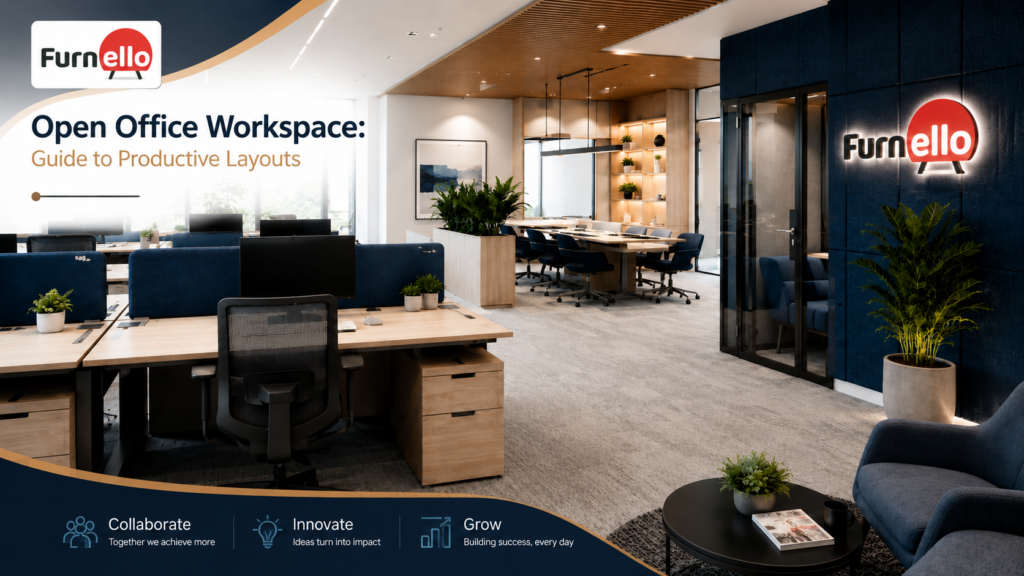
How to Design a Productive Open Office Workspace
An open office workspace can improve collaboration, communication, and teamwork when designed correctly. However, without proper planning, open offices can become noisy, distracting, and less productive. The key is creating a workspace that balances collaboration with focus.
Modern commercial interior design focuses on employee well-being, workplace productivity, and flexible layouts that support different working styles. By combining acoustic zoning, smart furniture choices, and organized workstations, businesses can create an office environment that helps teams perform at their best.
Also read : Furniture Buying Guide: Office Setup Checklist for Growing Businesses
Create Different Work Zones
Not every employee works the same way. Some tasks require collaboration, while others need complete concentration.
Collaborative Areas
Designate specific areas for team discussions, brainstorming sessions, and informal meetings. These spaces encourage communication without disturbing employees who need quiet environments.
Focus Areas
Create dedicated quiet zones where employees can concentrate on detailed tasks, reports, or project work with minimal distractions.
Meeting Spaces
Provide enclosed meeting rooms or phone booths for private discussions, video calls, and client meetings.
Control Office Noise
Noise is one of the biggest challenges in an open office workspace.
Use Acoustic Zoning
Acoustic zoning helps separate noisy and quiet activities within the office. Collaborative areas should be located away from focus zones to reduce distractions.
Add Sound-Absorbing Materials
Install acoustic panels, carpets, fabric partitions, and ceiling treatments to reduce noise levels and improve comfort.
Provide Phone Booths
Small phone booths or focus pods give employees a private space for calls without disrupting others.
Choose a Smarter Desk Layout
The way desks are arranged can directly impact workplace productivity.
Avoid Long Desk Rows
Long rows can increase distractions because employees constantly notice movement around them.
Use Cluster Seating
Grouping desks into smaller clusters encourages teamwork while reducing visual distractions across the office.
Maintain Clear Walkways
Keep main walkways away from workstations to minimize interruptions caused by foot traffic.
Use Flexible Office Furniture
Business needs change over time, and office layouts should be able to adapt.
Modular Workstations
Modular desks allow teams to expand, reorganize, or reconfigure workspaces without major renovations.
Mobile Collaboration Tools
Movable whiteboards, storage units, and privacy screens help teams create temporary work zones when needed.
Adjustable Seating
Comfortable ergonomic seating supports employee well-being and productivity throughout the workday.
Keep Workstations Organized
A cluttered workspace often leads to reduced focus and lower productivity.
Improve Cable Management
Use desks with built-in cable trays and wire management systems to keep workstations clean and organized.
Reduce Desktop Clutter
Encourage employees to keep only essential items on their desks to create a cleaner and more professional workspace.
Use Centralized Storage
Shared lockers and storage cabinets help maintain organized workstations while supporting hybrid work environments.
Designs for Workplace Productivity
A productive office supports both teamwork and individual performance.
Maximize Natural Light
Natural lighting can improve mood, reduce eye strain, and create a more inviting work environment.
Add Green Elements
Indoor plants can enhance office aesthetics while contributing to a more comfortable atmosphere.
Prioritize Employee Comfort
Comfortable furniture, proper lighting, and thoughtful space planning all contribute to better workplace productivity.
Benefits of a Well-Planned Open Office Workspace
Benefit | Impact |
Better Collaboration | Encourages teamwork and communication |
Improved Focus | Reduces distractions through zoning |
Greater Flexibility | Adapts to changing business needs |
Higher Productivity | Supports different work styles |
Better Space Utilization | Maximizes available office space |
Enhanced Employee Experience | Creates a comfortable work environment |
Conclusion
A successful open office workspace is not simply a collection of desks placed together. It is a carefully planned environment that balances collaboration, privacy, flexibility, and comfort.
By using smart commercial interior design principles, acoustic zoning strategies, and flexible workspace solutions, businesses can create offices that improve workplace productivity while supporting employee satisfaction. Investing in the right layout today can help organizations build a more efficient and adaptable workplace for the future.
FAQs
An open office workspace is a layout that minimizes enclosed offices and uses shared work areas to encourage collaboration and communication among employees.
When properly designed, an open office can improve collaboration, communication, and productivity while supporting different work styles.
Far far away, behind the word mountains, far from the countries Vokalia and Consonantia, there live the blind texts. Separated they live in Bookmarksgrove right at the coast
Modular desks, ergonomic office chairs, mobile storage units, and movable collaboration tools are ideal for flexible office environments.
Acoustic zoning separates noisy activities from focus areas, helping employees concentrate while maintaining collaboration opportunities.
The ideal layout depends on your team's work style, but clustered workstations, clear walkways, and designated collaboration areas typically improve communication while reducing distractions.
Office layouts should be reviewed whenever team sizes, workflows, or business requirements change. Using flexible furniture makes it easier to adapt the workspace without major renovations.
Furnello offers ergonomic office chairs, modular workstations, and modern office furniture designed to support workplace productivity and flexible office layouts. Their solutions help businesses create comfortable, functional, and efficient open office workspaces.