

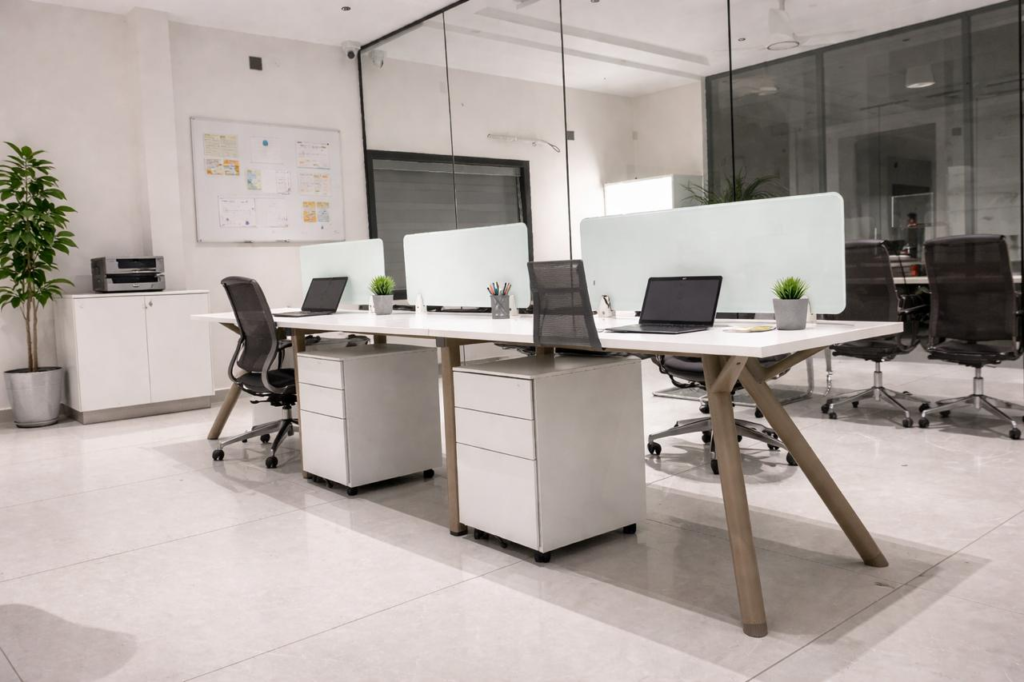
Walk into any furniture meeting and you will hear the same words thrown around: laminate, matte, high gloss, textured, wood grain. Most buyers nod along and quietly decide based on colour. That is a mistake, because the finish you choose decides how your office furniture looks on day one, how it survives daily use, and how much you pay per seat. This guide explains the main wood and laminate finishes for office furniture in plain language, so you can pick with confidence instead of guesswork.
Why the Finish Matters More Than You Think
The finish is the surface your office actually lives on. It takes the coffee spills, the dragged keyboards, the sun from the window, and the cleaning sprays every single day. Two workstations built on the same board can age completely differently depending on the surface applied to them. The finish also carries your brand: a matte oak texture says something very different from a glossy white executive desk. Getting it right means balancing three things: durability, appearance, and budget.
The Main Finish Options Explained
1. High-Pressure Laminate (HPL)
HPL is the workhorse of commercial office furniture, and for good reason. Sheets of kraft paper and decorative paper are pressed under high heat and pressure, then bonded to the board. The result is a hard, dense surface that resists scratches, heat, moisture, and daily abuse better than almost any other option in its price range.
HPL comes in hundreds of designs: solid colours, wood grains, stone textures, and matte or gloss surfaces. For workstations, conference tables, and storage that face heavy daily use, HPL is usually the smartest choice. Thickness matters, so ask your manufacturer for 0.8mm to 1mm laminate on work surfaces rather than thinner grades.
2. Pre-Laminated Board (MFC / Low-Pressure Laminate)
Pre-laminated particle board or MDF, often called MFC, has the decorative layer fused directly onto the board at the factory. It costs less than HPL and works well for surfaces that see lighter use: partition panels, cabinet sides, back panels, and budget storage units.
The trade-off is durability. The surface layer is thinner, so it scratches and chips more easily than HPL. A common smart strategy is mixing the two: HPL on table tops where hands and equipment live, pre-laminated board on vertical and internal surfaces where nothing touches. This keeps quality high where it matters and cost low where it does not.
3. Matte, Gloss, and Textured Laminate Surfaces
Within laminates themselves, the surface treatment changes everything. Matte and textured finishes hide scratches, fingerprints, and dust, which makes them the practical choice for busy workstations. High-gloss laminates deliver a premium, mirror-like look for reception areas and feature panels, but they show every fingerprint and demand disciplined housekeeping. Wood-grain textures give executive desks and cabins a warm, natural character without the maintenance burden of real wood surfaces.
4. Powder-Coated Metal (The Forgotten Finish)
Modern modular furniture is part steel: legs, frames, and understructures. Powder coating is the finish that protects them from rust and chipping. Ask your vendor about coating thickness and pre-treatment, because a beautiful laminate top on a poorly coated frame is still furniture that fails early.
How to Pick: A Simple Decision Framework
Start with usage, not colour. High-touch, high-traffic surfaces like workstations and meeting tables need HPL. Client-impression zones like the MD cabin and boardroom deserve premium laminates in rich wood-grain or textured finishes. Low-contact and internal surfaces can safely use pre-laminated board to control budget.
Next, think about light and maintenance. Matte and textured finishes hide scratches, fingerprints, and dust, which makes them ideal for busy offices. Gloss looks stunning on day one but honest only in offices with disciplined housekeeping. If your office gets strong sunlight, prefer fade-resistant laminates near the windows.
Then match your brand. Light wood grains and whites make small offices feel larger and more open. Darker walnut tones read as premium and grounded. Ask your manufacturer for physical finish samples and view them in your actual office lighting, because the same laminate looks different under showroom lights and your ceiling LEDs.
Finally, check the details that separate good furniture from cheap furniture: 2mm machine-pressed PVC edge banding on tops (edges fail before surfaces do), matching finish codes recorded by the manufacturer so future add-on orders match exactly, and consistent finish quality across a large batch.
Conclusion
There is no single “best” finish, only the right finish for each zone of your office. The winning formula for most companies is simple: HPL where people work, premium wood-grain laminates where clients sit, pre-laminated board where nobody looks, and matte textures almost everywhere. Choose by usage first, aesthetics second, and always test physical samples before a bulk order. A manufacturer who can walk you through finish options zone by zone is exactly the kind of partner your office deserves.
FAQs
High-pressure laminate (HPL) in 0.8mm to 1mm thickness. It offers the best balance of scratch resistance, design variety, and cost for daily commercial use.
HPL is pressed separately under high pressure and then bonded to the board, giving a harder, more durable surface. Pre-laminated board has a thinner layer fused at the factory, which costs less but suits lighter-use surfaces.
Matte and textured finishes are more practical: they hide scratches, fingerprints, and dust. Gloss suits low-contact display and reception areas that get regular cleaning.
Buy from a manufacturer who records your laminate brand and finish codes. This lets add-on orders a year later match your existing furniture exactly.
Edge banding is the protective strip sealing the exposed edges of laminated boards. Machine-pressed 2mm PVC edge banding prevents chipping and moisture entry, and edges are usually the first place cheap furniture fails.